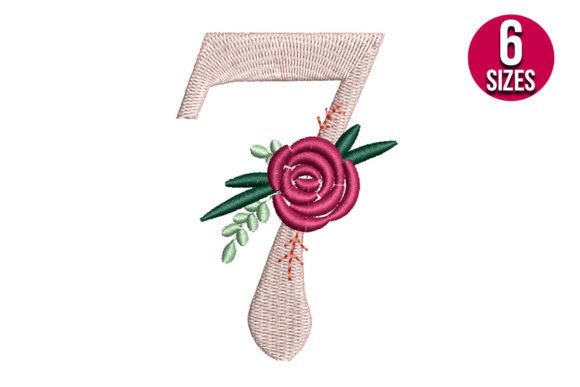
Floral Number 7: A Designer’s Review for Business Use
As an embroidery designer who has spent years digitizing patterns and consulting with small business owners, I approach every new machine embroidery design with a critical eye. It is not just about whether a pattern looks pretty on a screen; it is about how it performs in the real world of commercial production. Today, I am reviewing Floral Number 7, a design positioned within the Birthdays category but possessing far broader potential for branded merchandise. For boutique owners, Etsy sellers, and apparel decorators, understanding the practical application of this embroidery file is crucial before adding it to your digital library.
First Impressions: Visual Personality and Brand Fit
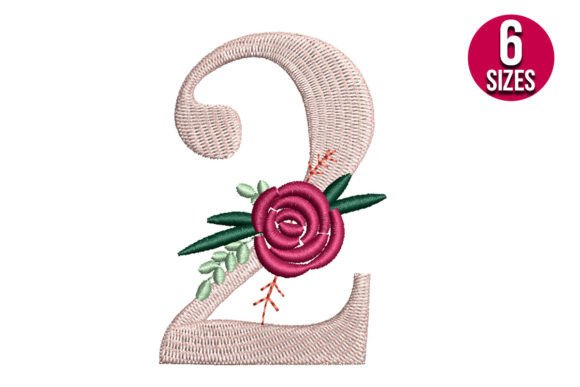
The title Floral Number 7 immediately suggests a blend of organic softness and structured numeracy. From a design perspective, this combination is powerful for businesses that want to appear approachable yet professional. The description notes that it helps create "lovelily personalized designs," which signals a handmade, artisanal aesthetic rather than a cold, corporate look. This makes it an excellent candidate for brands in the lifestyle, bakery, florist, or creative studio sectors.
When evaluating the visual personality, I look for balance. Does the floral element overwhelm the number, or do they coexist harmoniously? For small business merch, clarity is king. If the floral details are too intricate, they may turn into a blob of thread at smaller sizes. However, if executed well, this design offers a unique opportunity to soften the rigidity of numbers, making it ideal for anniversary celebrations, milestone birthdays, or simply adding a touch of elegance to standard numeric branding.
Real-World Applications for Small Business Merchandise
The versatility of Floral Number 7 lies in its adaptability across various substrates. Here is how I envision this design performing in a commercial setting:
- Embroidered Patches: This is perhaps the strongest use case. An embroidered patch featuring this design can be sewn onto denim jackets, canvas bags, or hats. Patches allow customers to buy a low-cost add-on that significantly boosts the perceived value of their purchase. The floral accents provide texture that flat printing cannot achieve.
- Staff Uniforms and Aprons: For cafes and bakeries, apron embroidery is a subtle yet effective branding tool. Placing Floral Number 7 on the chest pocket or lower corner of an apron adds a personal touch. It signals attention to detail, which translates to customer trust in the quality of the food or service.
- Cap Embroidery: Curved surfaces are tricky. If the design is compact, it works beautifully on the front panel of a dad hat or trucker cap. Cap embroidery requires clean lines, so ensuring the floral elements do not have excessive underlay or jump stitches is vital for a clean finish.
- Tote Bag Design: Canvas tote bags are a staple for eco-friendly brands. A large-scale version of this design can serve as the main graphic on a tote bag design, turning a simple utility item into a fashionable accessory that promotes your brand identity.
Navigating Technical Challenges and Fabric Constraints
While the aesthetic appeal is high, technical execution determines profitability. As a designer, I must warn against blind implementation. The description states this machine embroidery design is suitable for any fabric, but experienced decorators know that "any fabric" requires different stabilization techniques.
Stitch density is a primary concern. Floral elements often involve satin stitches or dense fill stitches. If the density is too high for lightweight fabrics like linen or thin cotton, the fabric will pucker, ruining the finished product. Conversely, if the density is too low for heavy denim, the fabric may show through the threads. I recommend testing this design on the specific material you intend to sell. For dark uniforms, ensure the design includes sufficient underlay or consider using a white backing stabilizer to prevent the garment color from dulling the thread colors.
Another critical factor is size. If you plan to use Floral Number 7 as a small chest logo, verify that the floral details do not merge together. Tiny lettering or intricate petals can get lost if the design is scaled down beyond its intended limits. Always check the recommended minimum size provided with the digital embroidery file.
Enhancing Brand Identity and Customer Engagement
In the crowded marketplace of handmade goods, brand identity is your most valuable asset. Using a unique design like Floral Number 7 helps differentiate your products from generic, mass-produced items. When a customer receives a package with a custom embroidered tag or a personalized gift featuring this design, it creates an emotional connection. This is particularly effective for the Birthdays category, where personalization drives sales.
Furthermore, consistent use of such design assets across your product line—from packaging accents to staff apparel—creates visual consistency. This professionalism builds recognition. Customers begin to associate the specific style of the floral number with your brand’s quality and care. It transforms a simple transaction into a brand experience, encouraging repeat business and social media sharing.
Practical Designer Notes for Production
Before you run a full production batch, follow these essential steps to ensure quality control:
- Test in Black and White First: Stitch out the design in monochrome to evaluate the contrast and definition without the distraction of color. This helps identify if the floral elements are distinct from the number.
- Check Hoop Size Compatibility: Confirm that the design fits within your standard hoop size. If it requires a large hoop, consider the implications for production speed and fabric handling.
- Select the Right Stabilizer: Match your stabilizer to the fabric texture. Cut-away stabilizers are generally better for garments that will be washed frequently, while tear-away may suffice for decorative patches that won't undergo heavy wear.
- Create a Printable Mockup: Before stitching, use a printable mockup to visualize the design on different products. This saves time and thread during the prototyping phase and helps in client approvals.
- Verify Commercial Licensing: Always confirm the license terms of the digital embroidery file. Ensure you have the right to use it for commercial embroidery projects, especially if you are selling the finished items on platforms like Etsy or Amazon.
Final Verdict for Embroidery Professionals
Floral Number 7 is a promising addition to any embroidery designer’s toolkit, particularly for those targeting the gift, celebration, and boutique markets. Its strength lies in its ability to humanize numeric branding, making it feel less like a label and more like a decoration. However, its success depends entirely on technical precision. By paying close attention to stitch density, fabric choice, and placement, you can leverage this design to create high-value custom apparel and accessories.
For small business owners, the key is to treat this not just as a pretty picture, but as a strategic design asset. Use it to elevate your handmade product offerings, enhance your brand’s visual story, and deliver a tangible sense of quality to your customers. With careful testing and thoughtful application, Floral Number 7 can become a signature element of your brand’s embroidery portfolio.